Skip to content
Land & Food systems at work

Concept image · not a photo of Joshua, Wild Mountain Farm or a customer

Food Sovereignty

Land & Food

Food at home, from a windowsill to a working garden—begin with your ground.

Get My LandIQ

One address. Your next beginning.

Read your place, then choose a first move.

Your address carries between reads on this device. Public-data lookups may be cached; account saving and sharing are separate choices.

Urban · Suburban · Rural

What this element can give a home

Food Sovereignty

Real grow-your-groceries numbers: what a raised bed actually saves, whether chickens beat store eggs, and how a food forest pays you back for thirty years. Perennials first, annuals second, honest yields throughout.

Get My LandIQ

Begin with a useful guide

Raised bed gardening, backyard chickens and food forests — with the grocery math shown

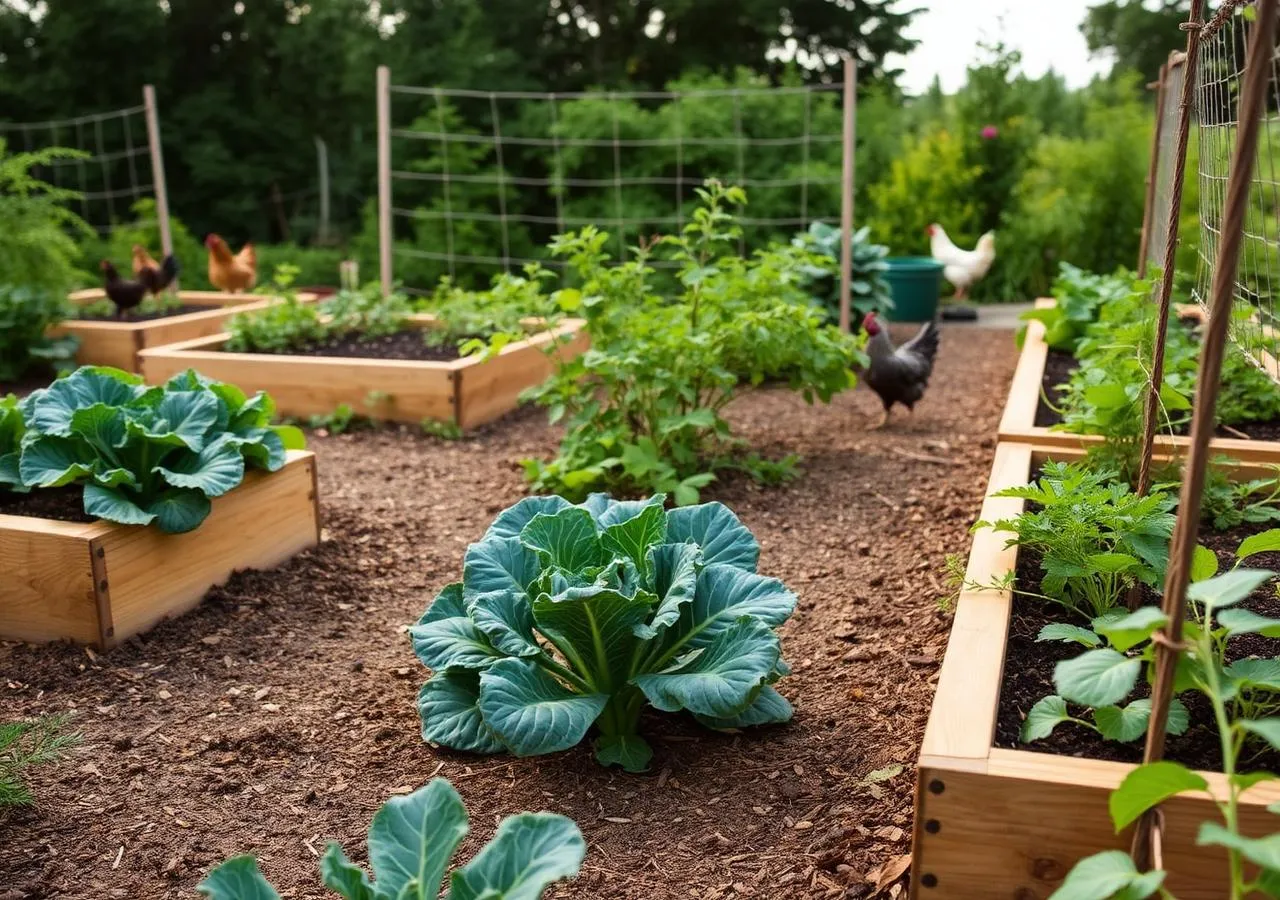
Food sovereignty starts smaller than most homesteading for beginners advice suggests. For an illustrative budget, a productive 4×8 no-dig bed might return $280 to $420 of grocery equivalent a year; crop choice, climate and management determine your actual yield. These guides give you the build, the fill recipe that doesn't cost a fortune, and a way to record your harvest weight and compare it with local grocery prices. These dollar ranges are planning examples, not OASIS harvest records.

Backyard chickens are the next step for most families, and the egg math here is run honestly: four hens, roughly $22 a month in feed, and a break-even against $9-a-dozen pastured eggs in about fourteen months. Winter care without heat lamps is covered too, because that's where most first flocks get into trouble.

Once beds and birds are running, the perennial layers do the compounding — seven-layer food forest guilds on a small lot, cane fruit for the fastest calories per dollar, and shiitake logs that turn shade you can't garden into six years of harvest. Patio, suburban yard or acreage, there's a version of each here scaled to your space.

Read My HomeIQ · Read My LandIQ

Every land & food guide

Filter by where you live

Kit requests & course waitlists

Questions worth asking

What does a raised bed actually save per year?

A single 4×8 bed planted in high-value crops — greens, herbs, tomatoes, peppers — can be modeled at $280 to $420 of grocery equivalent a year as an illustrative budget, not a personal harvest record, against about $180 to build it the first year and $25 a year after that.

Do backyard chickens really beat store eggs?

Compare your local egg price with feed, housing, bedding, care and veterinary costs. Laying varies with breed, age and season; use your own records rather than a universal break-even claim.

I only have a patio. Is this pointless?

A patio can support suitable herbs and vegetables. Choose crops you enjoy and compare container, soil and watering costs with the harvest you actually log; savings are not guaranteed.

Start with your land & food read

Get My LandIQ

Free newsletter

TheOASISDispatch

Seasonal ideas, practical methods and discoveries for your living system — from windowsill to acreage.

  • Practical methods, with assumptions you can check
  • Seasonal ideas for your next project
  • Sized for your place: balcony, yard or acreage
Where are you growing?

Pick one so the dispatch matches your space.

Free · Seasonal ideas · Unsubscribe in one click