Raised Beds
Building No-Dig Raised Beds That Last a Decade
Most raised beds fail at the corners in year three. Here is the joinery, the wood and the fill sequence that gets you to year ten.
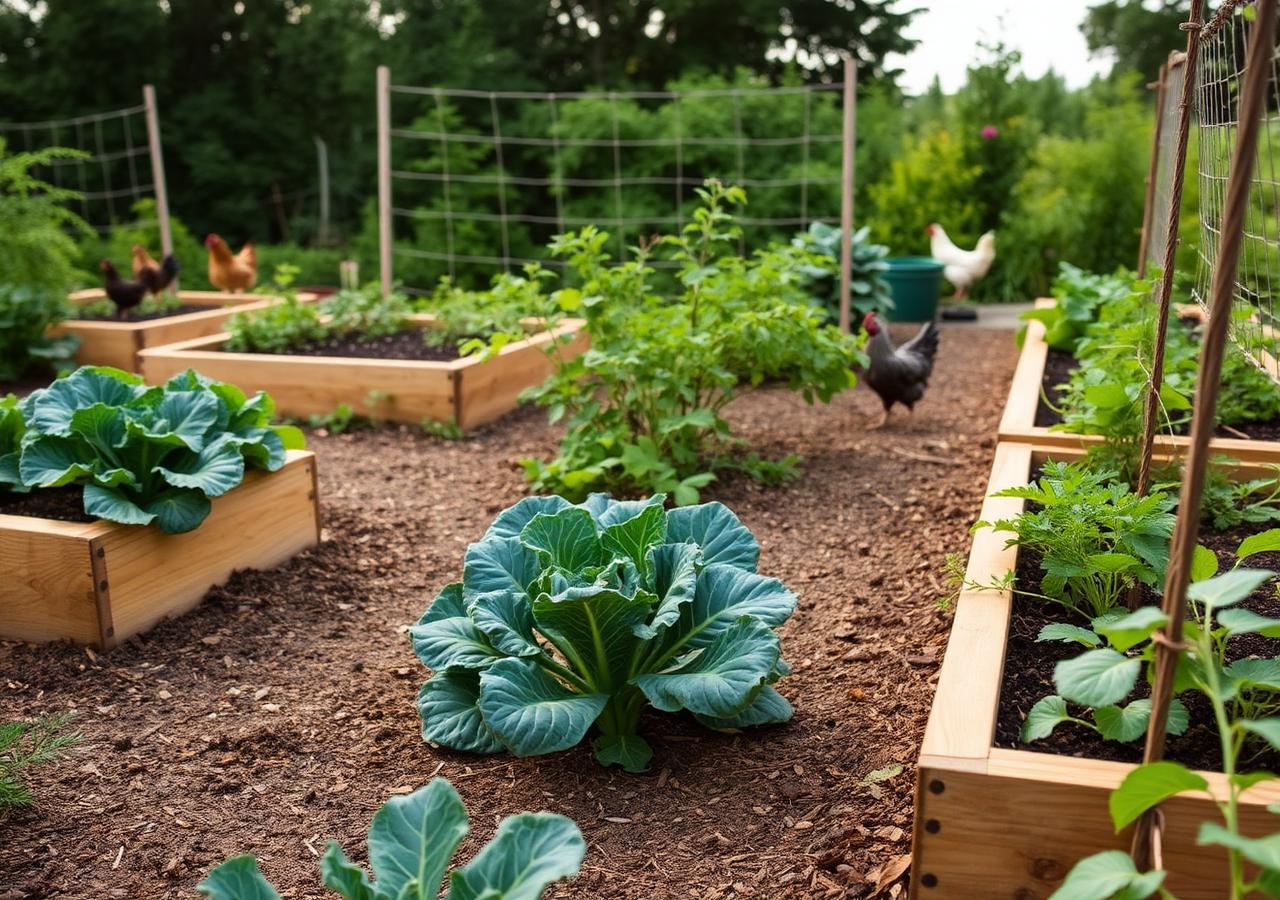
Our oldest beds went in during the spring of 2016 and are still square. The ones we built the year before, with butt-joined screws and untreated pine, came apart in three seasons.
Two things make the difference: the corner detail and never digging the ground underneath.
Materials
- Rough-sawn cedar or black locust, 2in × 12in
- Through-bolted steel corner brackets
- Plain cardboard (no tape or glossy print)
- Compost, 1.2 cu yd per 4×8 bed
- Straw or wood-chip mulch
Tools
- Circular saw
- Drill and impact driver
- Speed square
- Wheelbarrow
- Garden fork
Estimated cost: $180 per bed. Difficulty: Beginner.
1.Choose rot-resistant wood, rough-sawn
Cedar, black locust or white oak. Rough-sawn 2-inch stock lasts roughly twice as long as planed 1-inch. Skip landscape timbers and skip anything pressure-treated where roots will run.
2.Through-bolt the corners
This is the whole trick. Screws into end grain pull out after enough freeze-thaw cycles. Steel brackets with two through-bolts per side hold the geometry no matter what the soil does.
3.Lay cardboard over the grass — do not dig
Set the frame, overlap plain cardboard by six inches everywhere inside it, and soak it. The sod dies, the worms eat the cardboard, and the existing soil structure and fungal networks stay intact.
4.Fill in the right order
Coarse woody material in the bottom four inches if you have it, then finished compost to the top, then two inches of straw. Do not use topsoil from a landscape yard; it compacts and comes with weed seed.
5.Top-dress annually and never step in the bed
One inch of compost each autumn is the only input ours have had. Compaction from footsteps is what forces people back to tilling — keep the beds four feet wide so you can reach the middle.
Common questions
- What should I fill a raised bed with?
- A bulk mix of screened topsoil and compost, roughly 60/40, over a cardboard and coarse-organic base. Bagged potting mix is the most expensive way to fill a bed and the fastest to slump.
- How long do cedar raised beds last?
- Untreated cedar or white oak runs 10–15 years in most climates. Pine gives you 4–6. Line the inside face with landscape fabric, never plastic sheeting.
- How much does a raised bed actually save?
- A well-run 4×8 bed returns $250–$400 of grocery-equivalent produce a season after the first year, against roughly $180 to build.

Written by
Ellis Hartwell
Twelve years building and rebuilding systems on 28 mountainside acres. Everything published here has run on this property or been documented on site with the owners.
Related guides
Food SovereigntyFood Forests
Designing a Seven-Layer Food Forest Guild for a Small Lot
Seven-Layer Food Forest Guild Design for Small Lots
13 minIntermediate
Food SovereigntyMushroom Cultivation
Growing Shiitake on Oak Logs: An Afternoon of Work for Six Years of Harvest
How to Grow Shiitake Mushrooms on Oak Logs
10 minBeginner
Food SovereigntyBackyard Chickens
How Many Chickens for a Family of 4 — Real Egg Math
How Many Chickens for a Family of 4? Honest Egg and Cost Math
10 minBeginner
The newsletter
Get the Homestead Dispatch
One letter every other Sunday: what we built this week on the mountain, what failed, and the numbers behind it. No fluff, no sponsored filler.