
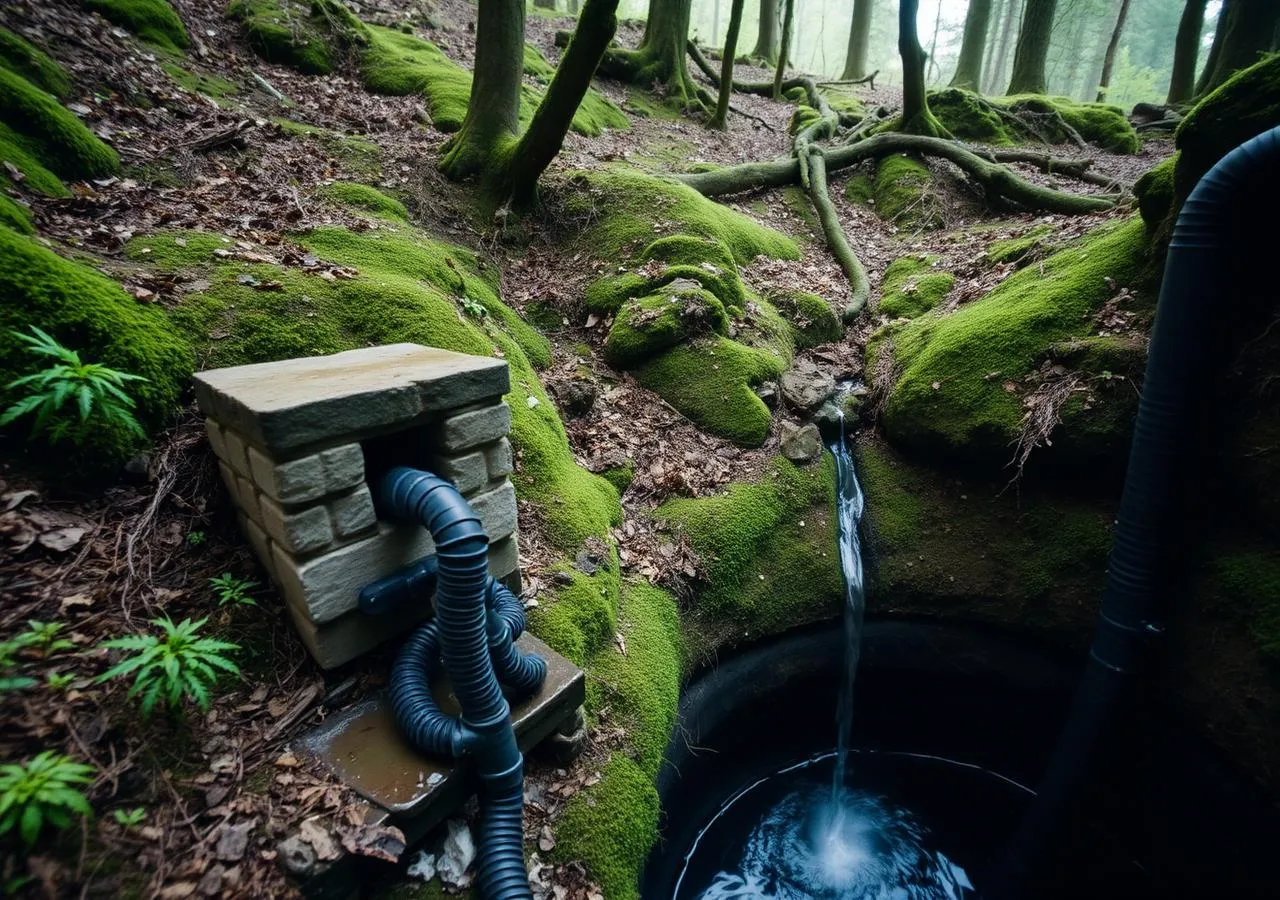
Concept image · not a photo of Joshua, Wild Mountain Farm or a customer
Solar Well Pumps
Sizing a Solar Well Pump for a 300-Foot Well
A step-by-step guide: Total dynamic head, not depth, decides your pump. Here is the arithmetic and the array size it lands on.
Start my projectSolar pumps can serve deep wells, but total dynamic head, required flow and available sunlight decide the design—not casing depth alone.
Get total dynamic head right and everything else — pump model, array size, wire gauge — falls out of it.
Materials
- DC helical rotor pump
- Pump controller with dry-run protection
- Submersible cable
- Safety rope
- Storage tank
Tools
- Well sounder or weighted tape
- Pressure gauge
- Multimeter
- Pipe wrenches
Estimated cost: $2,100–$3,400. Difficulty: Intermediate.
1.Measure static water level, not well depth
A 300-foot well often holds water at 120 feet. Drop a sounder and find the true static level, then note the drawdown during a pumping test. Everything downstream depends on this number.
2.Add up total dynamic head
TDH = static level + drawdown + rise to tank + friction loss + outlet pressure head. Illustrative inputs: 140 + 25 + 60 + 12 + 0 = 237 feet, not the 300-foot casing depth.
3.Pick the pump family
Below about 2 gpm at high head, helical rotor pumps win on efficiency and they self-prime. Centrifugal pumps make sense above 5 gpm at moderate head. For a deep well filling storage slowly, helical rotor is almost always the answer.
4.Size the array to the pump curve
Read the manufacturer pump curve at your TDH and required flow. For an illustrative model requiring 620W at 1.4 gpm and 237 feet, a 700W array may offer headroom; verify the actual model, controller and local solar conditions.
5.Design storage instead of pressure
Pump into a 1,500-gallon tank all day and pressurize the house from that with a small booster pump. This removes the surge load from your battery bank and gives you days of water if the pump ever fails.
Common questions
- Can a solar pump run a 300-foot well?
- Yes. Helical rotor DC pumps handle 300+ feet of lift on roughly 600–900 watts of array, delivering 1–3 gallons per minute through the day.
- Do I need a battery for a solar well pump?
- No. Pump to a storage tank during daylight instead — tank storage is far cheaper per usable gallon than battery storage.
- Will it work on cloudy days?
- At reduced flow. Size the storage tank for two to three days of household use so overcast stretches never reach the tap.

Written by
Joshua Sandstrom
Joshua has spent 25+ years in permaculture and natural building and 17 in renewable energy and water systems. For the last five he's been building OASIS on 28 acres in the Appalachian mountains of Western North Carolina.
A little further in
Discover along the way
The ground beneath your plans
Your zone, frost and rainfall can change your first move.
Explore this trailA small task for this week
Check your soil moisture and note where rain collects.
Explore this trailA quick roof-water read
A planning estimate, with the assumptions shown.
Assumes 85% collection efficiency; storage and use not included.
One roof, more than one harvest
Roof → rain → tank → beds: your systems support each other.
Explore this trailWaterIQ
Annual rainfall and catchment yield
Explore this trailSomething worth a closer look
Rainwater Harvesting: What Your Roof Actually Yields
Explore this trailRelated guides
WaterSpring Water Systems
Developing a Mountain Spring for Gravity-Fed Water
How to Develop a Spring for Gravity-Fed Homestead Water
15 minAdvanced
EnergySolar PV
Sizing an Off-Grid Solar Array From Real Load Data
How to Size an Off-Grid Solar Array From Real Load Data
12 minIntermediate
WaterRainwater Harvesting
Rainwater Harvesting: What Your Roof Actually Yields
Rainwater Harvesting: Roof Yield Math, Tank Sizing and First Flush
11 minIntermediate
Your next trail
See what WaterIQ finds at your place
Free newsletter
TheOASISDispatch

Seasonal ideas, practical methods and discoveries for your living system — from windowsill to acreage.
- Practical methods, with assumptions you can check
- Seasonal ideas for your next project
- Sized for your place: balcony, yard or acreage
Free · Seasonal ideas · Unsubscribe in one click