Solar PV
Sizing an Off-Grid Solar Array From Real Load Data
Panel-count rules of thumb put people in the dark every January. Here is the metering-first method we use on every system we help design.
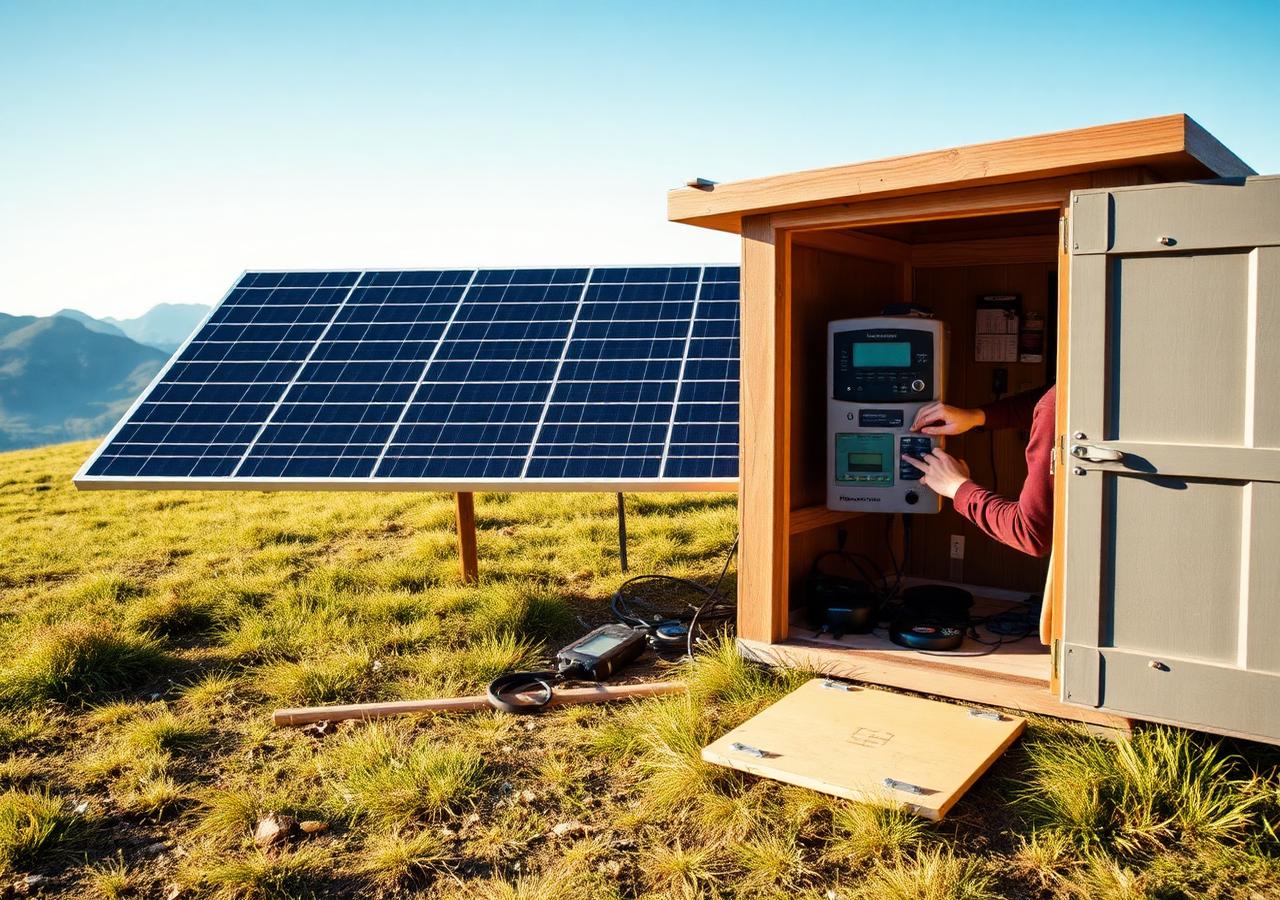
Every bad off-grid system I have been called out to fix started the same way: somebody counted appliances, guessed at hours, and bought a package. The array was usually fine in June and hopeless in January.
The fix is boring and it works. Measure what your household actually uses for a full month, then size the array for your worst solar month rather than your average one. Here is the exact process, with the numbers off our own farmhouse.
Materials
- Whole-house energy monitor or clamp-on meter
- Plug-in kWh meters (3–4)
- Notebook or spreadsheet
Tools
- Clamp multimeter
- Screwdriver set
- Ladder for panel access
Estimated cost: $60 in metering gear. Difficulty: Intermediate.
1.Meter the whole house for 30 days
Install a whole-house monitor on the main feed and log daily kWh. Thirty days catches weekend patterns, a laundry cycle or two and at least one cold snap. Our farmhouse averaged 11.2 kWh/day with a 19.6 kWh peak on a laundry-and-shop day.
2.Break out the four biggest loads
Put plug meters on the chest freezer, the well pump circuit, the refrigerator and whatever workshop tool you use weekly. In nearly every house we survey, four loads account for 60–70% of consumption. Ours were freezer, pump, fridge and a bandsaw.
3.Find your worst-month sun hours
Pull peak sun hours for your county from NREL's data set and take the December figure, not the annual average. This ridge gets 5.9 peak sun hours in June and 2.8 in December. That single number is what decides your array size.
4.Do the sizing math
Array watts = (daily kWh ÷ worst-month sun hours) ÷ system efficiency. For us: 11.2 ÷ 2.8 = 4.0 kW, divided by 0.72 for real-world losses = 5.6 kW. We built 6.6 kW because panels are the cheapest part of the system and a January surplus is never wasted.
5.Shift what you can to solar noon
Before buying storage, move the flexible loads. We run the well pump, the shop and the dehumidifier between 10 a.m. and 3 p.m. That alone cut the required battery bank by roughly a third.
Common questions
- How many solar panels do I actually need?
- Size against your worst month, not your average. Log a full month of real kWh, divide by your lowest-sun-hour month, then add 25% for wiring, temperature and inverter losses. For most homes in this guide's range that lands between 6 and 12 modern 400W panels.
- Can I size a system straight off my utility bill?
- You can get close. The bill gives you monthly kWh, but it hides which loads matter during an outage. Meter your fridge, well pump and heat source individually before you buy anything.
- Do I need to oversize for winter?
- Yes. December production can be a third of June in northern latitudes. Either oversize the array, plan a generator or propane backup, or accept load-shedding on the darkest weeks.

Written by
Ellis Hartwell
Twelve years building and rebuilding systems on 28 mountainside acres. Everything published here has run on this property or been documented on site with the owners.
Related guides
Energy IndependenceSolar PV
LiFePO4 vs Lead-Acid: What Six Winters Actually Cost Us
LiFePO4 vs Lead-Acid Batteries: Six Winters of Real Data
9 minIntermediate

Water SecuritySolar Well Pumps
Sizing a Solar Well Pump for a 300-Foot Well
How to Size a Solar Well Pump for a 300-Foot Well
11 minIntermediate
Energy IndependenceSolar PV
Is Solar Still Worth It in 2026? The Honest Post-Tax-Credit Math
Is Solar Still Worth It in 2026? Honest Post-Tax-Credit Payback Math
14 minBeginner
The newsletter
Get the Homestead Dispatch
One letter every other Sunday: what we built this week on the mountain, what failed, and the numbers behind it. No fluff, no sponsored filler.