Spring Water Systems
Developing a Mountain Spring for Gravity-Fed Water
Nine years, no pump, 43 psi at the barn. The full build: finding the vein, boxing it, and getting the water downhill clean.
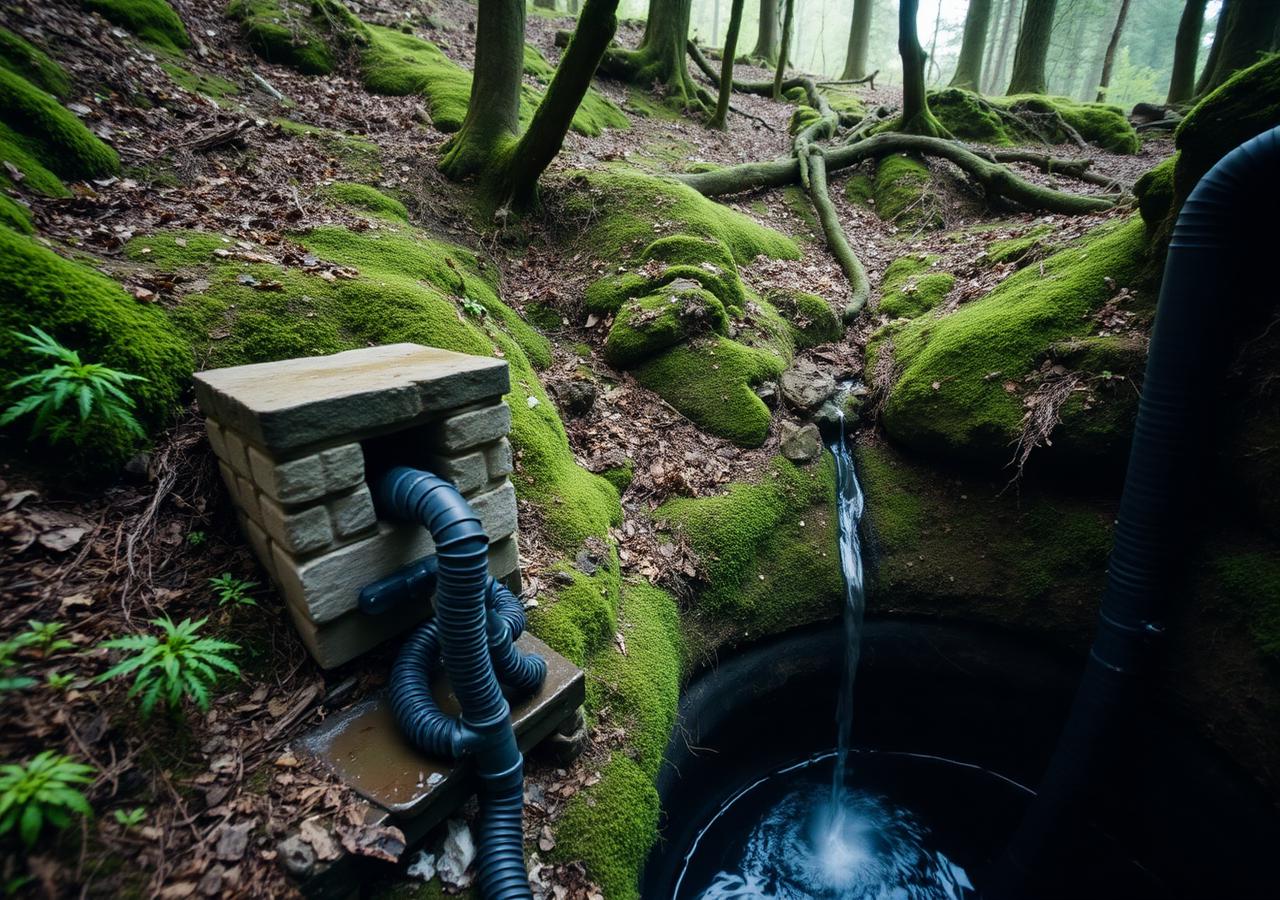
Gravity is the only pump that never fails, never needs power and never wakes you at 2 a.m. If you have fall on your land and a spring, you have the best water system money can buy for about a thousand dollars.
This is the second spring we developed on this property, documented from the first shovel.
Materials
- Spring box with lid
- Screened stainless intake
- Overflow and drain assembly
- 300 ft of 1in HDPE
- Washed gravel
- Bentonite clay
Tools
- Mattock and shovel
- Trencher or mini excavator
- Pressure gauge
- Pipe fusion or barb fittings
- Level
Estimated cost: $1,250. Difficulty: Advanced.
1.Find the vein, not the seep
Water surfacing on a hillside has usually traveled sideways. Dig uphill from the wet spot until you hit the point where water emerges from rock or a gravel seam under pressure. That is what you box — a seep boxed at the surface will silt in and go bad.
2.Flow-test in the driest month
Time a five-gallon bucket in late August. Even a half gallon per minute is 720 gallons a day, far more than a household uses. Design around the dry-season number and you will never run short.
3.Set the spring box with a clean water path
Bed the box in washed gravel, take the intake off the upstream face through a 40-mesh stainless screen, and cap the whole excavation with bentonite clay so surface runoff cannot reach the collection zone. Overflow and cleanout on the downhill face.
4.Calculate head and size the pipe
Every foot of fall gives you 0.433 psi. Our box sits 108 feet above the barn — 46.7 psi static, minus about 4 psi friction loss over 300 feet of 1-inch line at our flow rate. Undersize the pipe and you throw away pressure you can never get back.
5.Bury deep and protect the source
Below frost depth, on a continuous downhill grade, with no high points to trap air. Fence livestock out of the collection area entirely, and test the water annually for coliform whether or not it tastes fine.
Common questions
- How much fall do I need for gravity-fed water?
- Every 2.31 feet of vertical drop gives you 1 psi. Around 90 feet of fall delivers roughly 40 psi at the house before friction losses.
- Is spring water safe to drink?
- Not by default. Develop the spring properly, then test for coliform and nitrates, and run sediment plus UV treatment before the tap.
- What flow rate does a household need?
- A family of four is comfortable on a spring producing one gallon per minute continuously, given adequate storage.

Written by
Ellis Hartwell
Twelve years building and rebuilding systems on 28 mountainside acres. Everything published here has run on this property or been documented on site with the owners.
Related guides
Water SecuritySolar Well Pumps
Sizing a Solar Well Pump for a 300-Foot Well
How to Size a Solar Well Pump for a 300-Foot Well
11 minIntermediate
Water SecurityIrrigation
Gravity Drip Irrigation That Actually Runs at 4 PSI
Gravity-Fed Drip Irrigation Design for Low Pressure
8 minBeginner
Water SecurityRainwater Harvesting
Rainwater Harvesting: What Your Roof Actually Yields
Rainwater Harvesting: Roof Yield Math, Tank Sizing and First Flush
11 minIntermediate
The newsletter
Get the Homestead Dispatch
One letter every other Sunday: what we built this week on the mountain, what failed, and the numbers behind it. No fluff, no sponsored filler.