Solar PV
LiFePO4 vs Lead-Acid: What Six Winters Actually Cost Us
We ran a flooded lead-acid bank for six years, then replaced it with lithium in the same enclosure. Here are the real numbers on both.
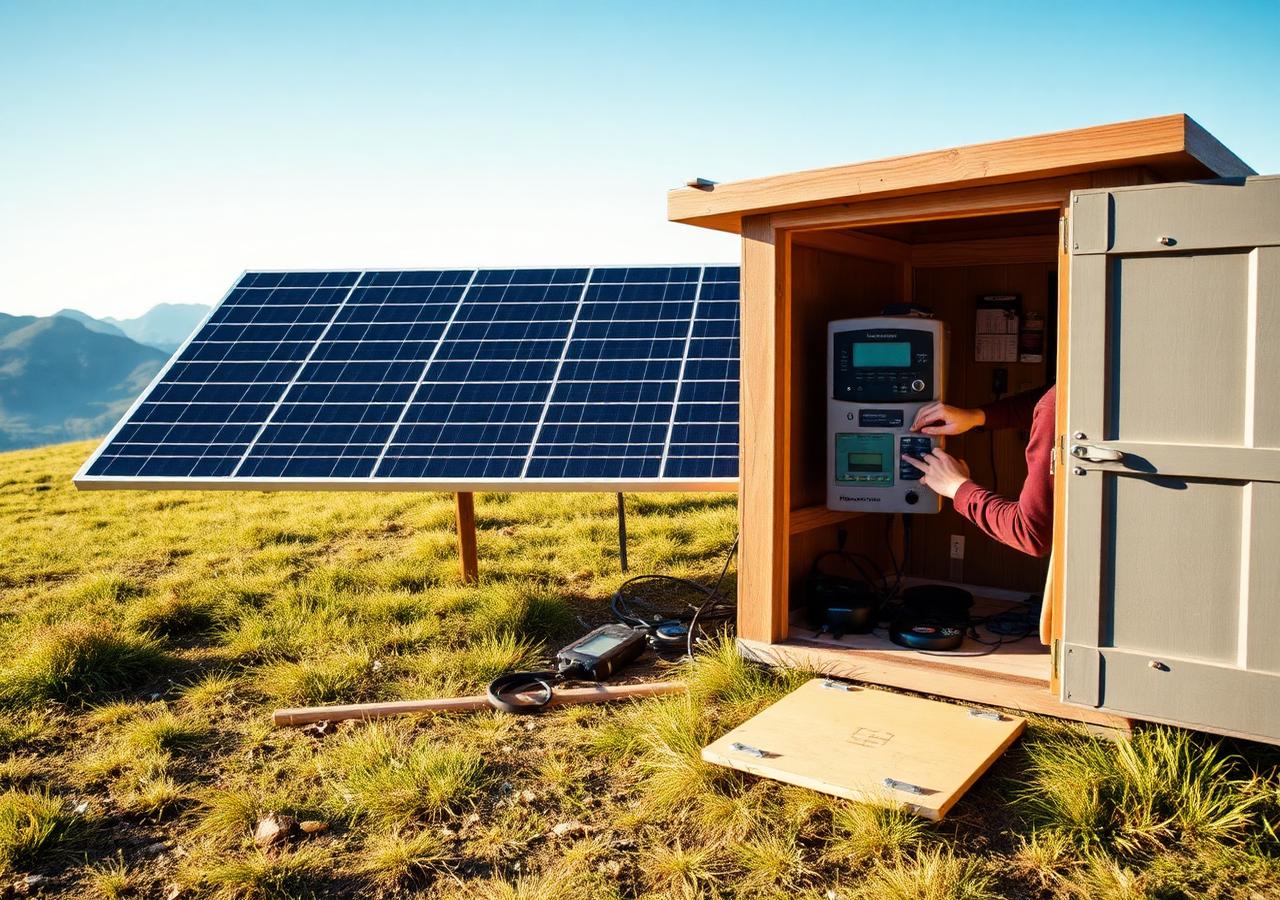
The lithium-versus-lead argument usually happens between people who have owned one of them. We have owned both, in the same room, powering the same house.
This is the ledger: purchase cost, usable capacity, maintenance hours, cold performance and what each bank looked like at end of life.
Materials
- Battery bank
- Battery monitor with shunt
- Interconnect cable set
- Vented enclosure
Tools
- Torque wrench
- Hydrometer (lead-acid only)
- Clamp multimeter
- Insulated socket set
Estimated cost: $3,200–$6,400 for a 10 kWh bank. Difficulty: Intermediate.
1.Compare usable capacity, not nameplate
Our 12 kWh flooded bank gave 6 kWh of usable energy at a sane 50% depth of discharge. The 10 kWh LiFePO4 that replaced it gives 9 kWh at 90%. The lithium bank is smaller on paper and half again bigger in practice.
2.Count maintenance hours honestly
Lead-acid cost me roughly 18 hours a year: watering, equalizing, cleaning terminals, taking specific gravity readings. Lithium has cost me one firmware update and two terminal torque checks in three years.
3.Watch the cold
This is where lead-acid earns its keep. It will accept a charge at 20°F, badly but safely. LiFePO4 must not charge below freezing without heaters. We keep the bank in an insulated closet on the warm side of the wall and it has never dropped below 46°F.
4.Do cost per kWh cycled
The lead bank cost $2,900 and delivered about 1,350 usable cycles before capacity fell off — roughly $0.36 per kWh cycled. The lithium cost $5,400 with a realistic 4,000 cycles at 9 kWh — about $0.15. Lithium wins on any system cycled daily.
Common questions
- Is LiFePO4 worth the extra cost over lead-acid?
- Per usable kWh over the life of the bank, yes. LiFePO4 gives you roughly 80–90% usable depth of discharge and 4,000+ cycles versus 50% and 500–1,200 cycles for flooded lead-acid.
- Will lithium batteries work in an unheated space?
- They discharge fine in the cold but must not be charged below freezing without internal heaters. Keep the bank in conditioned space or buy cells with heating built in.
- How long does a battery bank last?
- Six winters into ours, the LiFePO4 bank has lost under 8% capacity. Expect 10–15 years with sane charge parameters; expect 4–7 from lead-acid that is well maintained.

Written by
Ellis Hartwell
Twelve years building and rebuilding systems on 28 mountainside acres. Everything published here has run on this property or been documented on site with the owners.
Related guides
Energy IndependenceSolar PV
Sizing an Off-Grid Solar Array From Real Load Data
How to Size an Off-Grid Solar Array From Real Load Data
12 minIntermediate
Energy IndependenceSolar Heating
Building a Drain-Back Solar Hot Water Loop for Freezing Climates
Drain-Back Solar Hot Water for Cold Climates: Full Build
14 minAdvanced
Energy IndependenceSolar PV
Is Solar Still Worth It in 2026? The Honest Post-Tax-Credit Math
Is Solar Still Worth It in 2026? Honest Post-Tax-Credit Payback Math
14 minBeginner
The newsletter
Get the Homestead Dispatch
One letter every other Sunday: what we built this week on the mountain, what failed, and the numbers behind it. No fluff, no sponsored filler.