Blanco County, Texas — 32 in. average rainfall
Three Droughts, No Well: A Rainwater-Only Homestead in the Texas Hill Country
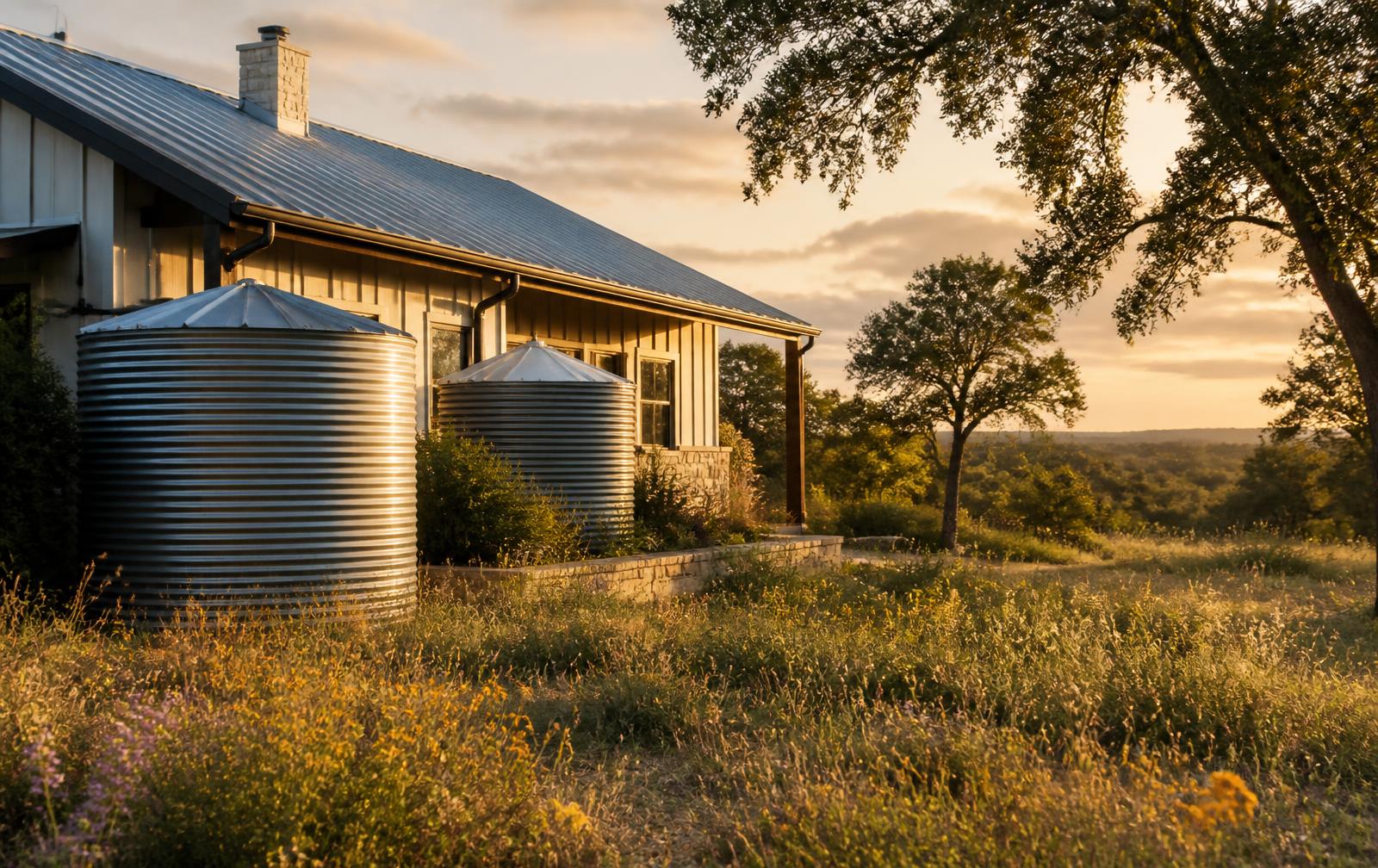
The Alvarez family was quoted $34,000 for a 620-foot well with no water guarantee. They built 30,000 gallons of rainwater storage instead and have not hauled a drop in five years — through two burn bans and a record dry summer.
- Water hauled in 5 years
- 0 gal
- Annual roof yield
- ≈62,000 gal
- System cost vs. well quote
- $19,700 vs $34,000
- Longest dry stretch covered
- 71 days
Two neighbors on their road drilled deep and came up dry. A third hit water at 620 feet that tested high in sulfate. When the Alvarezes got their own quote — $34,000, no guarantee — they started measuring their roof instead.
The math surprised them. At 32 inches of average rainfall, 3,100 square feet of metal roof sheds about 62,000 gallons a year. A household of four using 45 gallons a day needs roughly 66,000. Add the barn roof and the supply side was solved on paper before anyone dug a hole.
The real design work was the gap, not the total. Hill country rain arrives in violent spring and autumn bursts with long dry stretches between. We sized storage against a 71-day dry period from the historical record rather than the annual average, which is how 30,000 gallons became the number.
Treatment was where they refused to economize. Dual first-flush diverters dump the first twelve gallons off every downspout, and the potable chain runs sediment, carbon and UV with a lab test each spring and fall. Five years of results have come back clean.
The overflow turned out to be a bonus. Instead of piping excess to the road, they cut two swales above the orchard. Nineteen fruit trees have never been irrigated from the tanks — they drink what the tanks cannot hold.
What we'd do differently
- Size storage against your longest historical dry gap, not annual rainfall. The gap is what empties a tank.
- First-flush diverters are the cheapest water-quality improvement available. Put one on every downspout, not just the main one.
- Buy tanks in multiples. Three tanks let you isolate one for cleaning or repair without losing the supply.
- Plumb the overflow somewhere useful before the first big storm. Their original overflow washed out a driveway culvert in month two.
- Test twice a year even when it tastes fine. The spring test is the one that catches roof and gutter problems.
The newsletter
Get the Homestead Dispatch
One letter every other Sunday: what we built this week on the mountain, what failed, and the numbers behind it. No fluff, no sponsored filler.