Addison County, Vermont — Zone 4b
240 Pounds of Fruit From a Quarter Acre: A Vermont Food Forest at Year Four
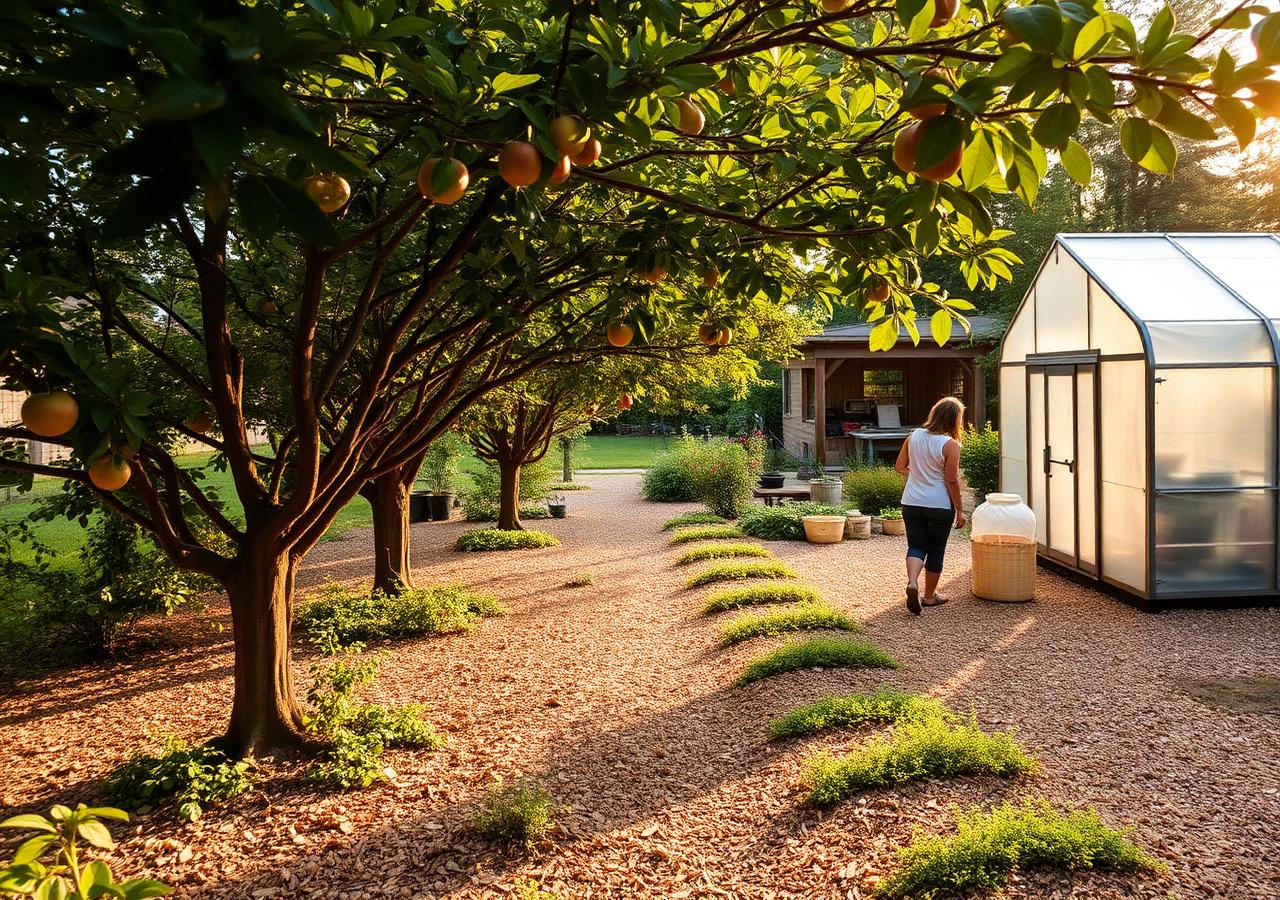
The Okonkwo family turned a mowed suburban backyard into a three-guild food forest. Four seasons later they harvested 240 pounds of fruit and berries and stopped mowing entirely.
- Year 4 harvest
- 240 lb
- Lawn converted
- 0.24 acre
- Establishment cost
- $1,860
- Irrigation after year 3
- None
Chidi and Marta had a flat quarter acre of Kentucky bluegrass and a mower they hated. They did not want a vegetable garden — they wanted something that fed them without a planting schedule every April.
We laid out three guilds on the sunniest two-thirds of the yard, leaving a clear play area their kids still use. Every guild got one standard-height fruit tree, two nitrogen fixers, six berry canes and a dense herb and ground-cover layer.
The critical decision was sequencing. Berries went in the first spring alongside the trees, so the family was picking raspberries in year two while the apples were still whips. That early yield is what kept them motivated through the awkward third year when a food forest looks like a weedy mess.
By year four the canopy had closed enough to suppress most grass, the comfrey was producing three cuttings a season, and irrigation came off entirely. The 240-pound harvest was 60% berries, but the first real apple crop landed the following summer.
What we'd do differently
- Plant the fast layers and the slow layers on the same day — early yields buy patience.
- Sheet mulching in autumn beats spring. The sod is fully gone by planting time.
- Voles took two young plums in year two. Hardware-cloth collars on everything from day one.
- Leave open ground somewhere. A food forest that swallows the whole yard gets resented.
The newsletter
Get the Homestead Dispatch
One letter every other Sunday: what we built this week on the mountain, what failed, and the numbers behind it. No fluff, no sponsored filler.